Colchicine 0.5mg / 0.6mg (Colcrys Generic)
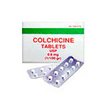
Clinical guidance, bioequivalence criteria, and verified partner dispensing standards for Colchicine 0.5mg / 0.6mg (Colcrys Generic). Reviewed by board-certified internal medicine and clinical pharmacotherapy specialists.
1. Clinical Dosing & Titration Protocols
Daily / Baseline Regimen
Gout Prophylaxis: 0.5mg to 0.6mg once or twice daily. Cardiovascular Secondary Prevention: 0.5mg once daily.
On-Demand / Titration Regimen
Acute Gout Flare: 1.2mg at first symptom, followed by 0.6mg 1 hour later (1.8mg total). Do not repeat within 3 days.
Severe renal impairment (CrCl <30): reduce dose by 50% and do not repeat acute flare courses more than once every 2 weeks.
2. Patient Administration & Safe Usage Guidelines
Take at the very first twinge of joint pain for maximum efficacy. Discontinue if severe watery diarrhea develops.
Clinical Practice & Formulary Guidelines for Colchicine 0.5mg / 0.6mg (Colcrys Generic)
Westover Hills Clinic provides evidence-based pharmacological reviews, bioequivalence assessments, and clinical monitoring recommendations for chronic disease management.
3. Frequently Asked Patient Questions
Why is the modern low-dose Colchicine regimen preferred?
The AGREE clinical trial proved that 1.8mg total over 1 hour provides identical pain relief to the historical toxic 4.8mg regimen with an 84% reduction in diarrhea.
How does Colchicine prevent secondary heart attacks?
In the COLCOT and LoDoCo2 trials, low-dose colchicine (0.5mg daily) inhibited vascular NLRP3 inflammasomes, reducing secondary stroke and myocardial infarction by 23–31%.
4. Pharmacological Mechanism & Receptor Profile
Targeted anti-mitotic alkaloid that arrests neutrophil microtubule assembly and selectively suppresses the NLRP3 inflammasome, terminating acute gout flares and reducing cardiovascular inflammation.
Rheumatology & Internal Therapeutics • Colchicine 0.5mg / 0.6mg (Colcrys Generic)
5. Chemical & Human Pharmacokinetic Matrix (Tmax, Half-Life, CYP450)
| Pharmacokinetic Parameter | Clinical Metric | Therapeutic Significance |
|---|---|---|
| Peak Plasma Time (Tmax) | 1.0 hour | Determines latency from ingestion to peak pharmacological onset. |
| Elimination Half-Life (T½) | 27 to 31 hours (deep intracellular leukocyte sequestration) | Governs duration of action and steady-state dosing intervals. |
| Peak Concentration (Cmax) | 2.5 to 3.0 ng/mL | Maximum observed systemic concentration in human plasma. |
| Bioavailability & Food Interaction | 45% | Defines oral bioavailability and dietary lipid dependency. |
| Plasma Protein Binding | 39% | Governs free circulating drug fraction available for receptor binding. |
| Volume of Distribution (Vd) | 500 to 800 Liters | Reflects tissue and lipid compartment penetration. |
| Hepatic Metabolism | Hepatic CYP3A4 and P-glycoprotein substrate | Primary enzymatic clearance and CYP pathways. |
| Elimination / Excretion | 40%–65% unchanged in urine; remainder fecal/biliary | Renal vs biliary/fecal excretion balance. |
6. Drug-Drug Interaction Matrix
| Interacting Agent / Class | Severity Tier | Clinical Mechanism & Management Strategy |
|---|---|---|
| Strong CYP3A4 / P-gp Inhibitors (Clarithromycin, Ketoconazole) | Contraindicated in Renal Impairment | Causes fatal colchicine toxicity; mandatory dose reduction by 75% in normal renal function. |
7. Adverse Reaction Profile & Clinical Incidence Rates
| Adverse Reaction | Incidence Rate | Physiological Mechanism & Mitigation Strategy |
|---|---|---|
| Diarrhea / Abdominal Cramps | 23% | Enterocyte microtubule inhibition; dose-limiting. |
| Nausea | 7% | Gastric transit effect. |
Peer-Reviewed Scientific Citations & FDA References
- Terkeltaub RA, et al. Dosing of oral colchicine for early acute gout (AGREE). Arthritis Rheum. 2010;62(4):1060-1068.